Salt, mineral and chlorine systems for Australian pools
Salt and mineral systems still make chlorine. The useful choice is how you generate it, how you protect it from the sun, and what the water does to metal.
Custom Pools editorial team · 8 March 2026 · Updated 22 March 2026 · 19 min read
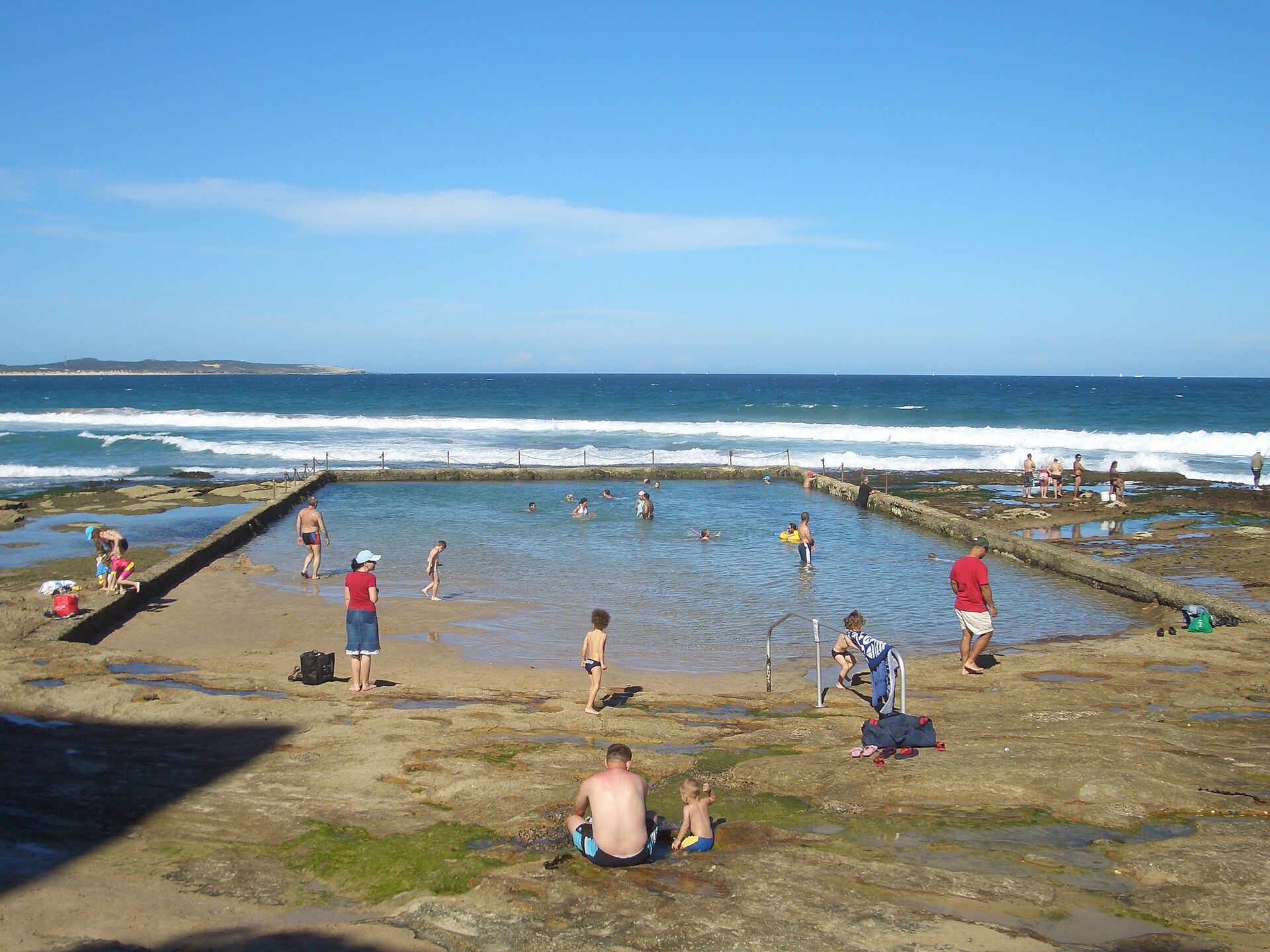
Photo: J Bar / Wikimedia Commons, CC BY-SA 3.0 · See the image credits page.
The brochure says salt. The water still needs chlorine. That is the first fact to keep in your head when a salesperson draws a line between a “chemical pool” and a “natural mineral pool”. In an Australian backyard the sanitiser that actually kills algae and the bacteria that arrive on skin is still chlorine, whether it is dosed from a drum, made in a cell from salt, or made in a cell from a magnesium blend.
The useful argument is not salt versus chlorine. It is how you generate a residual, how you stop the sun from destroying it by lunchtime, what the water does to stainless and stone, and how the system behaves in July when nobody is swimming. Get those four things right and the brand on the box matters less than the plant room that houses it.
Chlorine still does the killing
Free chlorine oxidises waste and inactivates the organisms you do not want in a family pool. Combined chlorine — chloramines — is what makes eyes sting and is a sign that the residual has been busy and not replenished. A weekly test strip that only looks at pH is not a water program. You need free chlorine, pH, total alkalinity and, outdoors, cyanuric acid.
Targets are ranges, not trophies. Outdoor water in Australian sun needs a modest free-chlorine residual and enough cyanuric acid to stop ultraviolet light wiping it by mid-morning — but not so much that the chlorine goes sluggish. Indoor water is a different chemistry. If a technician quotes one number from Hobart to Cairns, find another technician.
Shocking is a response to a measured problem: a storm, a party, a bloom, a combined-chlorine reading that will not come down. Sydney in high summer and tropical wet-season yards need that more often than a covered Melbourne court in May.
What a salt chlorinator actually does
A salt-water chlorinator passes dissolved chloride through an electrolytic cell and produces chlorine in the circulation loop. You still have a chlorine pool. You have simply moved the factory from a drum in the shed to a cell on the pipework.
Salt levels are a band. Too low and the cell faults. Too high and you waste salt, aggravate corrosion and make the water feel like a warm harbour. Cells scale and wear out. They need inspection, an acid wash when the plates crust, and replacement on a timescale of years. A cell that is never opened is a future Saturday with green water.
Output is a percentage. In a hot week with a full household you turn it up and run the pump longer. In a cool week with a cover on you turn it down. The common failure is leaving the box at a factory setting all year.
A chlorinator on a starved filter or a two-hour pump run will lose. The sanitiser can only treat water that arrives.
Mineral blends, and what they do not do
Mineral systems usually add magnesium chloride, sometimes potassium, on top of or instead of a simple sodium-chloride dose. The marketing language is softness, skin feel and a spa-like mineral story. Some of that feel is real. Magnesium changes the tactile quality of the water. It does not invent a new sanitiser.
You still generate chlorine. You still manage pH, which the cell’s alkaline by-product tends to push up. You still manage cyanuric acid in the sun. If a mineral pool is easier to live with, it is usually because the owner is testing more carefully, not because magnesium has abolished chemistry. Blends and cells are still recurring costs. If the brief is “fewer chemicals”, the honest path is a cover, fewer leaves and a residual that is actually present.
Cyanuric acid and Australian sun
Ultraviolet light destroys free chlorine. Australian outdoor pools therefore use cyanuric acid — stabiliser — so the residual survives the day. That is not optional in a Sydney or Perth backyard that sits in full sun. It is also not a “set and forget” additive.
Stabiliser accumulates. It does not evaporate. Every stabilised chlorine tablet you throw in a floater adds more. Many salt pools receive cyanuric acid at commissioning and then again whenever someone “tops up” with the wrong product. Too little and you are pouring chlorine into sunlight. Too much and you have a lazy residual: the test shows cyanuric acid in the clouds and algae still finds a corner.
The only reliable way down is dilution — drain and refill a portion — or a specialist treatment. In a drought-aware city that is a planning problem, not a shrug. Keep a written reading. If you do not know last spring’s cyanuric acid number, you do not have a water program.
Indoor pools almost never want outdoor levels of stabiliser. There is no harsh UV to fight, and a high cyanuric figure simply dulls the chlorine. Liquid chlorine (sodium hypochlorite) or a calcium-hypochlorite shock used with care is the usual indoor language. If you enclose a former outdoor pool, change the chemistry; do not drag the old habit under the roof.
Liquid chlorine, indoor rooms and the days the cell is not enough
A salt cell is a daily factory. It is not a good emergency service. After a nor’easter dumps a garden into the deep end, or after Australia Day with fifteen cousins, you often want a measured dose of liquid chlorine and a long filter run, not a twist of the output dial and a prayer.
Liquid chlorine raises pH and adds no stabiliser. That is why indoor rooms like it, and why it is the cleanest way to lift a residual without piling up cyanuric acid. Store it cool and never mix it with acids in a bucket. Calcium hypochlorite has a place as a shock if you also need hardness; it is a poor thing to leave in a damp shed next to fertiliser.
Indoor rooms trap chloramines. Ventilation, a cover when idle, and a residual that is present but not theatrical matter more than the brand of cell. Talk to the person who designed the enclosure before you copy a backyard salt setup under glass.
Metals, stains and the quiet death of stainless
Perth bores can be hard and iron-rich. Adelaide water can be mineral-heavy. Copper from a heater, a cheap algaecide or a corroding fitting will stain a pale interior. A metal test is cheaper than a re-acid-wash. Sequestering agents help when the source is the problem; they do not excuse a salt pool sitting against every metal it can reach.
Grade 304 trim tea-stains within a season of coastal salt and a backyard chlorinator. Grade 316 is the ordinary upgrade. Duplex 2205 belongs where water sits against a fitting you cannot face replacing. Read coastal durability as the materials essay; here it is enough that chloride plus warmth plus a crevice is how pitting starts. Rinse rails, skimmer screws and light niches. Do not leave a cell running hard against a closed loop.
Winter output, covers and the rest of the year
A chlorinator does not know it is June. You do. In Melbourne and Canberra the water is cold, the sun is weak, and the bather load collapses. Output should fall with it. A cell left at summer settings in a covered southern pool will climb the free-chlorine reading and chew the cell for no benefit. The winterising job is a lower output, a still-present residual, and filtration that turns over the water — not a shutdown.
In the tropics the opposite error appears: owners treat the wet season as a holiday from chemistry because the water looks dark from rain and tannin. Dilution drops the residual and the salt. The cell then underproduces just as the heat and the nutrient load rise. That is how a Cairns pool goes green between Friday and Monday.
A cover is part of the sanitiser system. It cuts UV loss, cuts debris and cuts the temptation to overdose. It also concentrates whatever you did put in. If you dose with the cover on, you are dosing a smaller, darker room. Measure.
Choose a system the plant room can live with
Pick the sanitiser after you pick the climate, the enclosure and the metal specification, not before. A simple salt chlorinator on an outdoor Sydney rectangle with a cover and a competent filter is a boring, good answer. A mineral blend is a comfort choice on top of that answer. Liquid chlorine is often the indoor and the emergency answer. Tablets in a floater are how cyanuric acid sneaks up on people who thought they had a salt pool.
Ask the designer where the cell will sit, how you will access the plates, whether the heater’s heat exchanger is rated for the chloride level you intend, and who is responsible for commissioning readings. Write those readings down. The rest of the water, climate and care library assumes you have a residual, not a story about minerals.
Photo: J Bar / Wikimedia Commons, CC BY-SA 3.0
Questions readers ask
- Is a salt pool chlorine-free?
- No. A salt chlorinator makes chlorine from dissolved salt. The water should still test for free chlorine, pH and cyanuric acid like any outdoor sanitised pool.
- Do mineral pools need less chlorine?
- Mineral blends change how the water feels. They do not replace a residual sanitiser. You still need enough free chlorine to deal with sweat, sunscreen and a February storm.
- Should an indoor pool use a salt chlorinator?
- Often no. Indoor rooms trap chloramines and do not need outdoor-level cyanuric acid. Liquid chlorine, good ventilation and a cover usually behave better than a salt cell sized for a sunny backyard.
Found an error? Use the contact form or read how we handle corrections in editorial standards.