Winterising and year-round pools in Melbourne and Canberra
Southern winters do not ask you to empty a concrete pool. They ask you to cut the chemistry, keep a residual, watch frost and leaves, and heat only on the days you will actually swim.
Custom Pools editorial team · 20 December 2025 · Updated 15 March 2026 · 18 min read
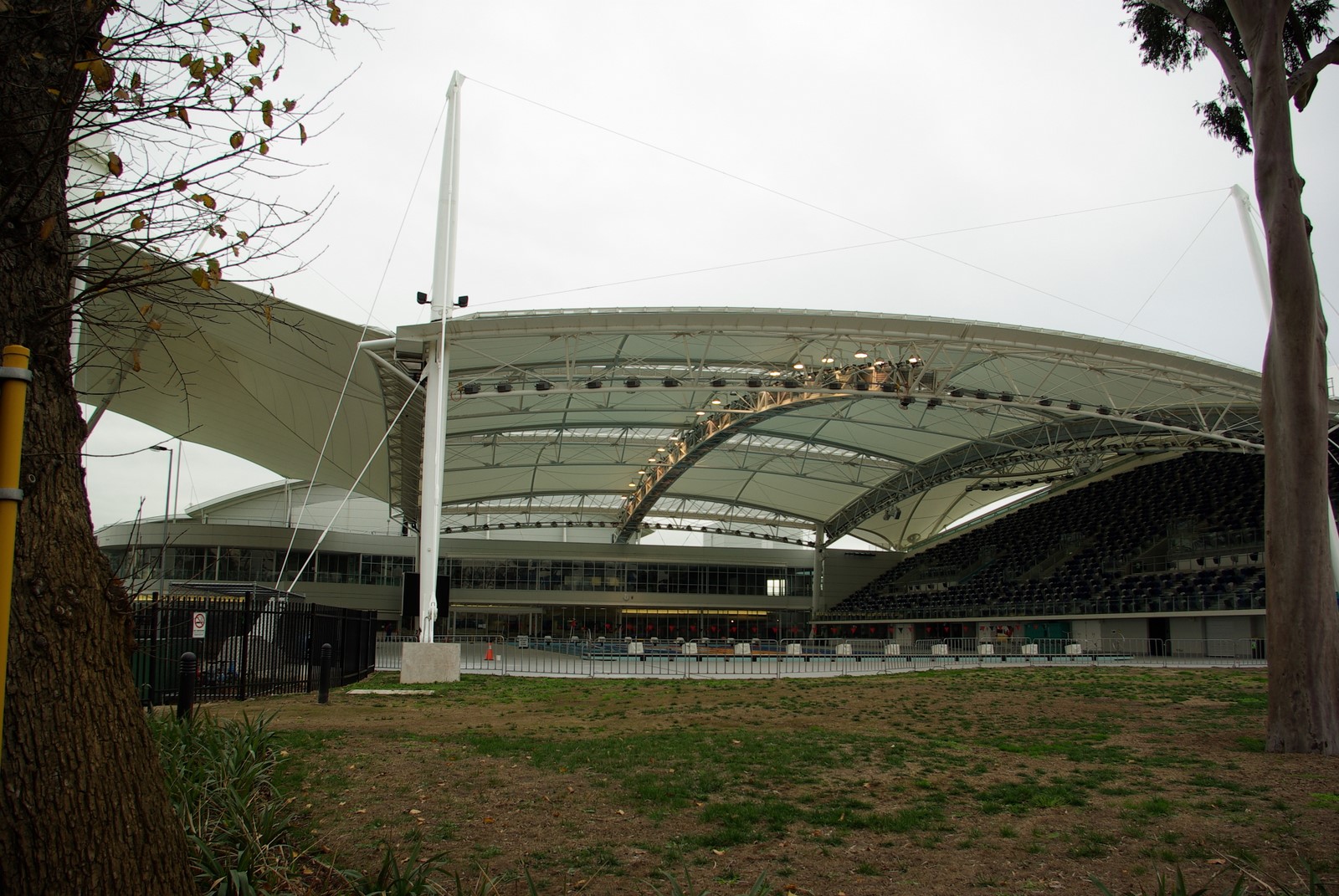
Photo: Stevage / Wikimedia Commons, CC BY-SA 3.0 · See the image credits page.
Melbourne and Canberra both get called “four-season” cities as if that were a lifestyle brand. For a pool it is a set of mechanical facts. Air temperatures drop, overnight radiation empties heat from the surface, frost finds hollows, plane trees and oaks drop a second garden onto the water, and the household stops swimming. The wrong response is to drain a concrete shell because a relative in another climate once did. The right response is to winterise in place: less sanitation, not zero; a cover; circulation that still happens; and a heating decision that matches how often anyone will get wet.
Canberra is not simply a colder Melbourne. It is inland, drier, and more continental. Frosts are routine on the tablelands. Alpine pockets and higher suburbs toward the Brindabella side see colder nights again. Melbourne’s frost is patchier — low-lying eastern and northern pockets, the hills, still clear nights after a front — but the leaf load of a Victorian garden can be worse than anything in a Tuggeranong court. Treat the two cities as cousins, not copies.
Do not empty a concrete pool because winter arrived
Water in a concrete pool is part of the structure’s ordinary life. It loads the shell, supports the interior finish and keeps hydrostatic pressure in a conversation the engineer allowed for. Pump that water out because the season changed and you can create a new problem: a lightweight shell on wet ground, a rising water table after a sodden Victorian August, movement at a step or a bench, freeze-thaw in fittings that now sit dry and then wet again.
Fibreglass has its own winter story and a manufacturer’s instruction that you should actually read; vinyl-lined pools in Australia are less common in custom work and have their own fold-and-drain folklore imported from other countries. For the ordinary custom concrete rectangle in Camberwell or Narrabundah, the winter default is leave it full, cover it, and look after it.
Drain for a reason: a structural repair, a finish replacement, a contamination you cannot dilute. Do that under advice, with groundwater in mind, and not in the week of a hard frost.
Frost, pipes and the plant that sits outside
Frost breaks what it can sit in. A pipe that holds still water in an exposed run, a dosing line, a solar collector left full on a roof, a pump that was “just turned off for a month” with water in the housing — those are the casualties. In Canberra they are routine enough that a competent installer designs for them. In Melbourne they catch people who thought frost was a country thing.
Ask where the low points drain, whether the solar circuit has a winter bypass and a drain-down, and whether the heat pump’s manual wants the unit isolated or still powered for its own protection. Do not invent a shutdown sequence from a northern-hemisphere forum. The heating essay is about choosing a machine; winter is about not killing the machine you chose.
Outdoor showers, wall taps and an auto-fill that uses an exposed line deserve the same thought. A split fitting in July is a small object with a large invoice.
Water itself, in a deep Australian residential pool, rarely freezes into a slab that concerns the shell. Surface ice on a shallow beach or a wide step in a Canberra cold snap is more plausible than a frozen deep end. Still, floating a few objects in a spa or a shallow shelf if ice is forecast is an old precaution. The cover does most of the work by stopping radiation to the night sky.
Covers, leaves and the garden that does not know it is winter
A southern winter cover has two jobs: cut debris and cut heat loss if you still heat. The debris job is the one most households need. Oaks, planes, liquidambars, claret ash and the ornamental pears that Melbourne loves will fill an uncovered pool with a tannin stew. Canberra’s winds move dry leaf across open courts with impressive efficiency.
A cover that is on, with a cover pump or a decent fall so water does not pond and become a second mosquito pond, is the minimum. A cover that is off because “we might swim if it is nice” will be off until October and the pool will be a compost. If you truly might swim, say so and run a heating-and-cover habit. If you will not, winterise properly and stop teasing yourself.
Netting over a small court can help in the fortnight of peak fall, but a net is not a substitute for a cover on a family rectangle, and it is a trip hazard if it is not detailed. Skimmer socks and more frequent basket-emptying are the unglamorous extras. Do not let a skimmer sit choked under a cover; the pump will still try to suck.
Reduced sanitation, not a holiday from it
Cold water slows biology. It does not stop leaves from rotting, dust from arriving, or a warm northerly week in August from waking algae that you had forgotten. A salt or chlorine system should have its output cut, not its power cord pulled.
Keep a residual you can measure. Test less often than in January, but test. pH will still wander, especially if a cell is ticking over. Cyanuric acid can wait until spring unless you are about to heat and swim hard. Salt cells still scale; a mid-winter inspection is cheaper than a failed start in October.
Filtration hours can drop. They should not hit zero. Stagnant water under a cover is how you open the blanket in September and find a smell. A few hours of turnover, a couple of times a week at minimum, is the sort of habit that survives a working life. Timers exist so you do not have to be virtuous at dawn.
Residential owners who “close” by switching everything off at the board are how spring start-ups become drain-and-refill jobs.
Heat if you swim, not if you feel guilty
A heated outdoor pool in a southern winter is a luxury with a straight face. It can be a wonderful one: a fogging surface on a still July morning in Kew, a Saturday in Reid when the sky is hard blue and the air is four degrees. It is also the act of heating a shallow outdoor room. Price the cover, the machine and the energy as a season of occasions, not as a cheap everyday habit.
Households that swim twice a month should heat for those days, not hold 28 degrees for the weeks in between. Households that train before work all winter should be talking about an indoor or enclosed pool, a swim spa with a lid, or a membership — not about a ten-metre outdoor rectangle and a heroic gas bill.
Canberra’s case for enclosure is stronger. The air is drier and colder; the swimming season outdoors is shorter; the fantasy of “we’ll just heat it” dies on the first run of minus-something nights. Melbourne’s case is patchier. A covered court in a sheltered inner garden, used by people who actually like cold air, can work with a heat pump on the better days. A windswept bayside block is a different thermal object.
Do not buy the heater in November from a catalogue photograph. Sit outside at 7am on a July Saturday and decide whether that is a life you want.
Canberra frost, alpine pockets and the suburbs that pretend they are coastal
If the block falls away to a frost hollow, if you are up toward the mountains, or if you already know which nights blacken the windscreen, tell the designer before the plant room is a leftover slot on the south side. Insulation of pipework, location of the heat pump (which also hates being asked to drink air at minus a few), and the choice of cover all shift.
Salt water and winter metal is a quiet corrosion story. Rinse handrails. Do not leave a cell running hard into a closed, cold system.
Possums on a cover and a duck that decides the pool is a pond are southern facts. A cover reduces the invitation. Live with it or net it; do not poison it.
Spring is a start-up, not a surprise
Pick a week in September or early October. Take the cover off and immediately scoop what got in. Clean the filter. Test everything, including salt and stabiliser. Bring the residual up before you invite people. Look at the interior in proper light for winter stains and black spot that sat still for months. Check the fence and the gate — frost and wet ground move things, and a barrier that worked in March must still work in October.
If you shut solar collectors down, recommission them on a day you are home. If you have a heat pump, give it air and a dry coil before you demand mid-twenty water on the first warm afternoon.
Winterising is not a product. It is a reduced version of the same care you already owed the water, plus frost, plus leaves, plus an honest sentence about whether anyone will swim. The rest of the water, climate and care library assumes that sentence has been said.
Photo: Stevage / Wikimedia Commons, CC BY-SA 3.0
Questions readers ask
- Should I empty a concrete pool for winter?
- Not as a casual habit. An empty concrete shell can lose the support of the water, move on reactive or saturated ground, and freeze-damage fittings. Winterise in place unless an engineer or builder has told you to drain for a specific repair.
- Can I turn the chlorinator off from June to September?
- You can cut the output hard. You should not abandon a residual. Cold water slows algae; it does not abolish leaves, dust or the odd warm spell. A low, tested residual and a filter that still turns the water over is the winter setting.
- Is an indoor pool the only way to swim all year in Canberra?
- It is the honest way to swim in comfort through July. An outdoor pool can be heated and covered for occasional use, but you are heating a shallow room with no roof. Price that honestly before you pour.
Found an error? Use the contact form or read how we handle corrections in editorial standards.