Pool plumbing, filtration and plant rooms explained
Pretty water is a circuit. Skimmers, returns, a pump that matches the pipe, and a plant room you can actually service matter more than the pebble.
Custom Pools editorial team · 2 December 2025 · Updated 14 December 2025 · 20 min read
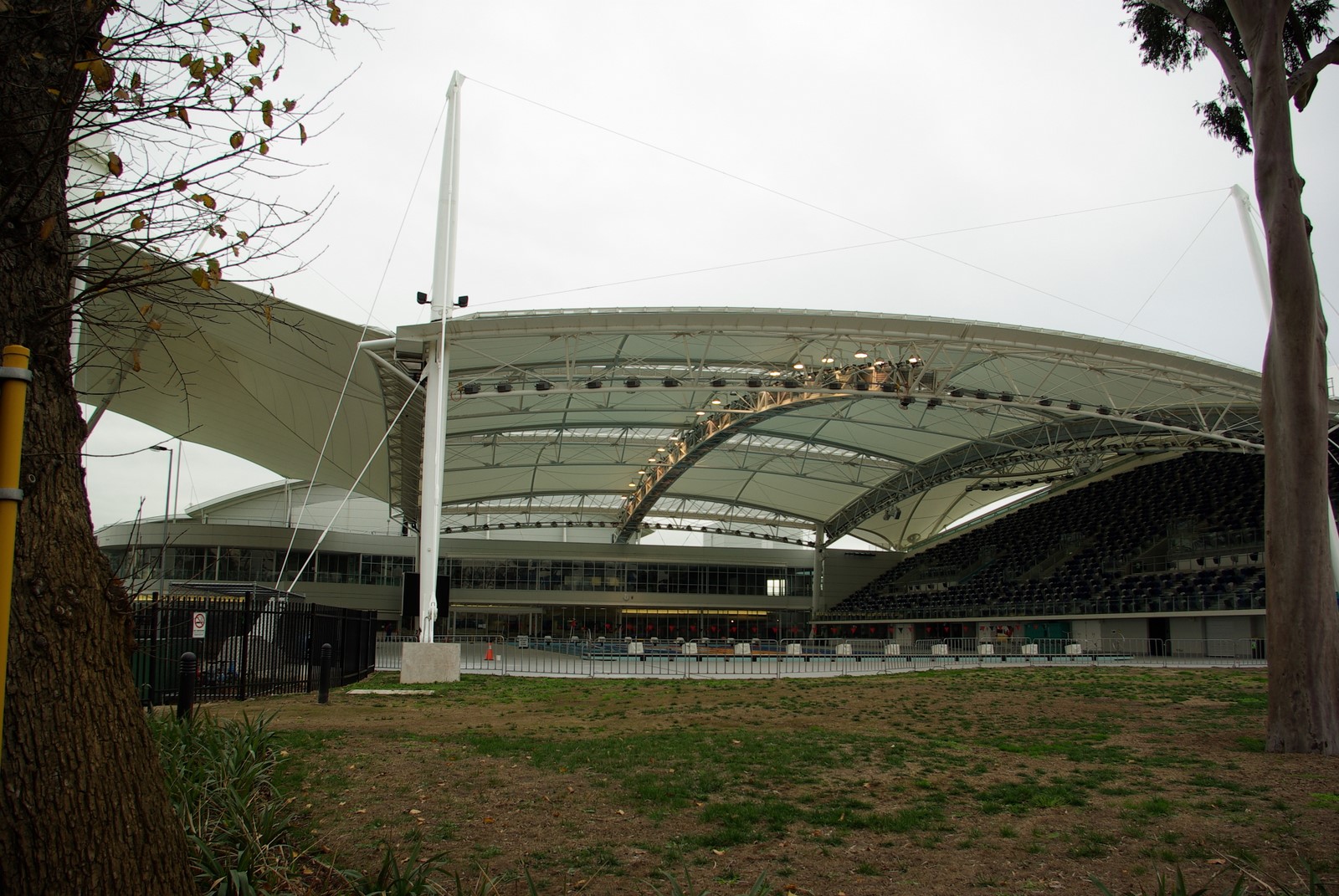
Photo: Stevage / Wikimedia Commons, CC BY-SA 3.0 · See the image credits page.
A public aquatic centre in Melbourne makes the point that backyard salesyards prefer to hide. Water that looks still is being collected, pushed, filtered, sanitised, sometimes heated, and put back with a pattern that does not scribble the surface. The plant is not an afterthought in a plastic box. It is the other half of the pool. Custom residential work is a smaller circuit with the same physics and a much smaller cupboard to put it in.
This is the plumbing and plant essay in the construction hub. The sequence that buries the pipes is in the anatomy of a build. Sanitiser lives in salt, mineral and chlorine systems. Heat is a separate load in solar, heat pumps and gas. Lights need a conduit someone remembered; see lighting a custom pool. What follows is how the water moves, what cleans it, and why a plant room you cannot stand in becomes a weekly grievance.
Skimmers and gutters are different ways to take the top off
Most Australian backyard pools take surface water through one or two skimmer boxes. A weir door skims the film of dust, oil and leaves; a basket catches the frog; a pump pulls from there and from a main drain if you have one. Two skimmers on a long rectangle are often better than one heroic skimmer on a windy site. Place them where the breeze sends the rubbish, not where the elevation looks symmetrical.
A gutter — a perimeter overflow or a wet-edge trough — takes the surface as a sheet. That is a different hydraulic design: a catch trough, a balance tank or surge volume, and a pump that can run the weir without sucking the tank dry. Do not “add a wet edge” to a skimmer pool by cutting a slot in the coping. Read wet-edge construction before a tiler invents a gutter.
Main drains, where they are still used, are a floor suction and a safety detail. Dual outlets and covers that meet current requirements are the adult version. Older single drains are a renovation topic, not a nostalgia.
Returns should move the whole tank, not decorate a wall
Returns put filtered water back. Their job is turnover without a whirlpool in the shallow end and a dead corner behind the spa. Floor returns can sweep grit. Wall returns can set a gentle rotation. A cleaner port is a dedicated line, not a return stolen with a valve.
Aiming is a commissioning task. A jet on a waterline tile etches a fan in the scale. A jet that fights a wet-edge sheet breaks the look you paid for. A spa that shares a pump needs valves a household can understand at 7pm.
If you heat, the return path matters. A solar array is a second circuit with its own pipe size. A heat pump wants flow inside a range, not whatever is left after the cleaner is on. Do not stack devices on one pair of 40-millimetre tails and hope.
Mains size and the 40-millimetre habit
A lot of Australian domestic pools were piped in 40-millimetre pressure pipe because that is what the truck carried. It is enough for a small rectangle and a modest pump. It is not enough once you add spa jets, a feature, a distant plant room or a hungrier filter. Velocity, noise and head loss go up, and the pump sits on a part of its curve that cooks seals.
Custom work should start from the flow you want and the length of the run, then pick a diameter that keeps velocity in a sensible band. That is often 50 millimetre on the mains, sometimes larger on a long run or a wet-edge circuit. The exact number belongs to the hydraulic designer. The principle you can enforce is: do not copy the last job’s pipe schedule onto a different pool. Suction lines should be short, generous and airtight. A hairline leak on the suction side is air in the pump and a chlorinator that thinks the flow has died.
Pump curves are not horsepower
Pumps are sold in horsepower. They are used as a match between a curve and a system — pipes, lift, filter, heater, valves. A variable-speed pump is a gift if someone sets the speeds: quiet overnight filtration, a higher clean, a spa speed. It is a waste if it is left on a high default.
Oversizing “to be safe” is how inner-suburban yards hum at 9pm. Undersizing is how a spa feels like a bath. Ask to see the calculation. Ask what speed the filter will run at in summer. Ask for a pump that can be carried out of the room when it dies; some pits are tombs.
Sand, cartridge and glass media
Sand filters are the Australian default because they are simple, they tolerate a bit of neglect, and they backwash. The backwash is also their political problem. Waste water has to go somewhere legal — not into a stormwater gully, not onto a neighbour’s ferns. On a tight site with no sewer option, sand can be the wrong product.
Cartridge filters catch finer dirt and do not need a backwash line. They need a pad, a hose, and a person who will rinse them before they become concrete. A bank of large cartridges is a good inner-urban answer if you can pull the cores. A single undersized cartridge behind a tight lid is a weekend of swearing.
Glass media is a sand alternative: often a longer interval between changes, often less backwash water, a higher first cost. It still lives in a sand-style vessel. If the laterals are cracked, new media will not save you. Match the dirt load — gums, construction dust, a nearby oval — to the media and to the owner.
Hidden rooms and the box against the fence
The plant can be a dedicated room, a buried bunker, a space under a bench, or a polyethylene box along the boundary. Hidden rooms win on looks and, if they have mass and a door, on sound. They lose if they flood, cook the electronics, or force a technician to stand in a puddle under a joist.
Above-ground boxes are honest, thin and resonant. In an outer suburban garden they can be planted into. In a Paddington or Fitzroy terrace they become the thing the neighbour writes to the council about. A plant room needs a floor that drains, a sump if it can flood, safe power, and enough air that a heat pump does not sit in its own exhaust. It needs a light and a door that opens without dismantling the roller cover. These are why a technician can service the pool in forty minutes instead of two hours you will pay for.
Ventilation is a chemistry and a corrosion problem
Closed rooms collect humidity, chlorine smell and heat. Metal lids corrode. Circuit boards die. A gas heater has combustion-air and flue rules that are not “we left a gap under the door”. A heat pump in a hole with no inlet fights itself and announces the fight to the street. Design vents as architecture if the room is near the living edge. Louvres that face a bedroom will make enemies. Think of the air path the way you think of the water path.
Acoustics in the inner suburbs
Pumps hum. Heat pumps cycle. Blowers scream. A variable-speed pump on a low night setting is the best acoustic decision most households can make, followed by rubber isolation, a heavy lid, and not putting the kit on the boundary of a neighbour who already hates the glass fence.
Some councils and body corporates have night-noise expectations a brochure pump will fail. Specify published sound figures and put mass between the machine and the bedroom. A lattice screen is not mass. If the only place for the plant is under the living-room window, change the design. The outdoor living essays will not help once the compressor is in the wall cavity by another name.
Access is a design test
Every vessel will need its lid off. Every pump will need to come out on a board. If the room requires the technician to lie on wet concrete with a phone torch, the design has failed. Leave space in front of the filter. Do not bury unions. Label the valves as if the owner is intelligent and busy.
A Melbourne or Canberra plant that cannot be reached without crossing a wet, unlit path will not be serviced in July. A Sydney box that cooks on a west wall will age electronics in a few seasons. Keeping a Sydney pool healthy is chemistry; it is also whether the pump is still alive in February.
Commission the circuit you drew
Handover should include a walk through the valves, a measured flow if anyone owns a gauge, a sanitiser that is actually generating or dosing, and a written note of speeds and backwash or cartridge intervals. Lights should come on without tripping a residual-current device. The cleaner should not starve the heater.
If the water turns, the plant is only half the story — the rest sits in the water, climate and care hub. If the water does not turn, you do not have a chemistry problem yet. You have a construction problem, and it is easier to fix before the paving hides the mains.
Photo: Stevage / Wikimedia Commons, CC BY-SA 3.0
Questions readers ask
- Is a cartridge filter better than sand for a home pool?
- Cartridge can filter finer and does not need a backwash line, which helps on tight inner-urban sites. It does need regular hose-downs and a place to do that without flooding a neighbour. Sand and glass media suit owners who will backwash and who have a legal place for the water. The better filter is the one that matches the pipework, the dirt load and the person who will clean it.
- Why is my plant so loud?
- Often a cheap lid on a thin box, a pump sitting on a hard slab, a heat pump hard against a boundary, and no acoustic thought at design. Inner-suburban sites need a room or an enclosure with mass, ventilation that is not a hole aimed at a bedroom, and equipment selected for sound, not only for price.
- How big should the pipes be?
- Large enough that the water velocity stays in a sensible range at the flow you actually want. Many older Australian backyard pools were piped too tight for the spa jets and the cleaner that were added later. A custom job should size mains to the circuit — often a step up from the 40-millimetre habit — and then choose a pump that sits on the resulting curve.
Found an error? Use the contact form or read how we handle corrections in editorial standards.