Pool interiors: pebble, glass bead, tiles and render
The interior is the surface you live with for a decade. Colour, texture and chemistry matter more than the sample board in the showroom.
Custom Pools editorial team · 26 February 2026 · Updated 8 March 2026 · 18 min read
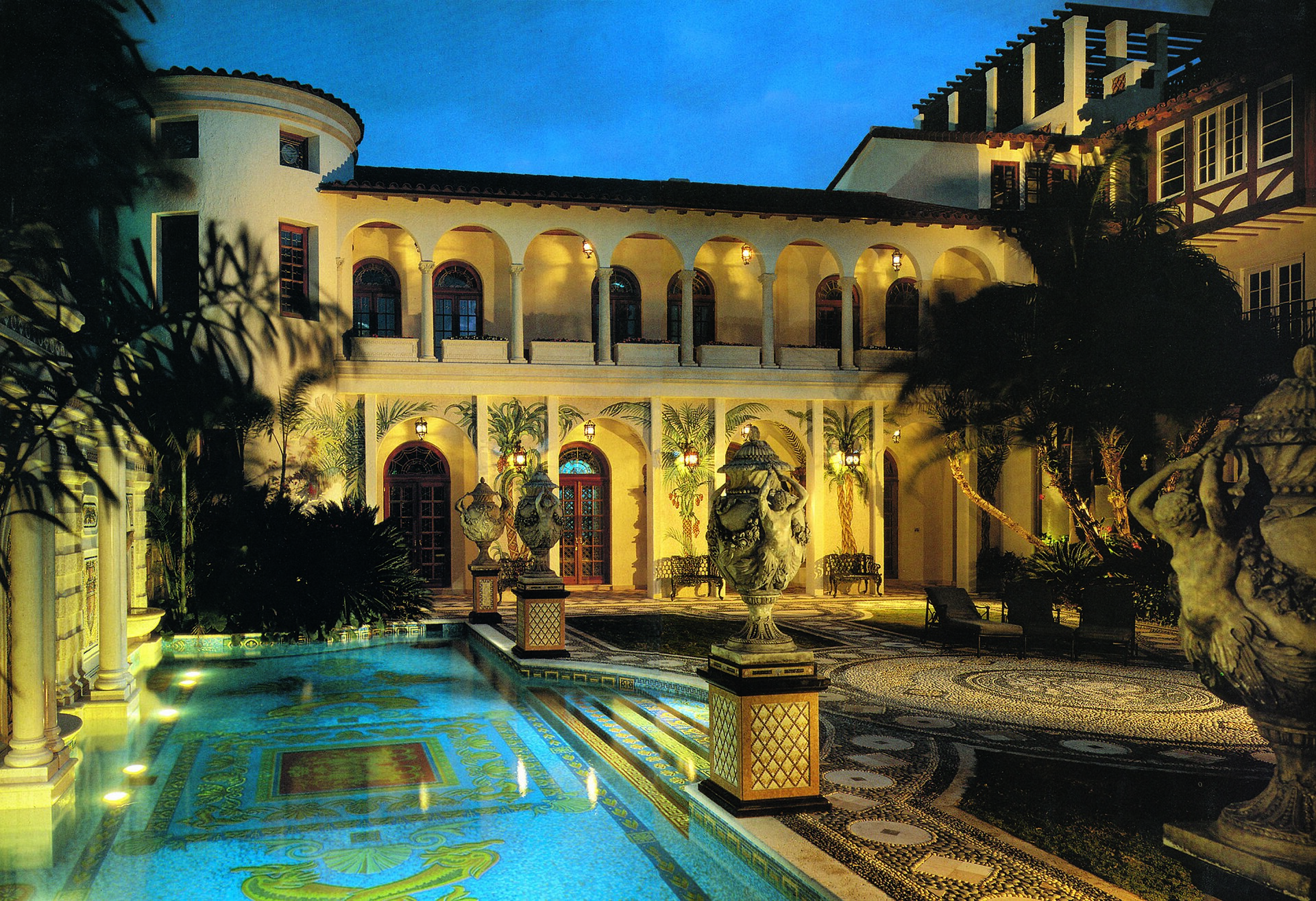
Photo: FANTINI1900 / Wikimedia Commons, CC BY-SA 4.0 · See the image credits page.
The interior is the only finish a swimmer is inside. Coping can be swapped and a plant room rebuilt; the floor and walls take the sun, the salt and every clumsy acid wash. Australian custom pools are still mostly concrete, so this is a finish conversation. If you are still choosing the structure, read concrete, fibreglass and vinyl first.
Take the sample board into the backyard at noon. Wet it. Look at it in shade and in western glare. Ask what the same product looked like after eight summers on a similar aspect, not after eight weeks.
Exposed aggregate pebble
Pebble — sold under a cluster of trade names, all of them some mix of natural stone in a cementitious binder, then exposed — remains the default interior on Australian concrete pools. It is familiar to applicators from Cairns to Hobart. It hides small variations in the shell. It has a texture that most people can walk on without feeling they have stepped onto a wet bathroom floor.
The stone itself varies. River pebble in greys and creams reads as a hole in the garden. White blends look tropical and show every leaf stain. Charcoal makes a reflecting court. Mixed “reef” blends often look busy once the water is on them.
Application quality matters more than the brochure name. The shell must be sound, the scratch coat even, the pebble placed and washed at the right moment. Ask who will stand in the hole, and ask to see a pool they finished two summers ago.
Pebble is not maintenance-free. Calcium sits on the high points; metals from bore water or a failing heater stain a pale blend. An acid wash will brighten a tired pebble and will eat the cement matrix if it becomes a habit. Salt systems suit most modern mixes; they do not suit a “set and forget” attitude to saturation and pH.
Glass bead and quartz
Glass bead interiors — small vitreous spheres in a binder — and coloured quartz mixes sit between pebble and tile. They are smoother and they catch light in a way a river stone does not. Owners who want a jewel-box spa or a dark court often land here.
The smoothness is the point and the risk. On a bench it feels civilised. On a step without texture it can feel like wet glass once a biofilm arrives. Specify a coarser grade on treads, or a contrasting mosaic on the first step.
Quartz can be tinted toward almost any water colour. That freedom is how suburban pools end up an intense aqua that looks like a leisure centre in person. Test the wet colour against the house brick and the coping, not against a resort on a phone. Both systems need a shell that has finished its early movement; they do not forgive hollows the way a heavy pebble can.
Fully tiled interiors
A fully tiled pool is a different object. Glass mosaic or ceramic, taken from the floor up through the waterline and feature walls, turns the shell into a tank you can read as architecture. It is the most expensive common interior, the most unforgiving of movement, and the one that ages by grout rather than by stone.
Do it when the geometry is simple enough to tile well, or so particular that pebble would look like a compromise. A rectangular plunge with a mosaic floor can look inevitable. A freeform kidney fully tiled in a busy blend can look like a bathroom that escaped.
Glass mosaic handles underwater light and is at home on a wet-edge weir. Ceramic is tougher underfoot if you do not polish it. Whatever the body, adhesive, grout and movement joints must be specified for immersion and for Australian thermal range. A tiler who has only done showers is not a pool tiler. Grout will darken and grow years before the tesserae fail; inspect it the way you service a pump.
Painted interiors and render
Paint and thin cement renders are how many older Australian pools were finished, and how some still are when the budget has been spent on excavation. A chlorinated-rubber or epoxy paint over render is a real system. It is also a refinish cycle, not a generation of finish.
In Australian sun a painted interior will chalk, fade and wear at the waterline and on the steps. Recoating is not a weekend with a roller. If you cannot face emptying the pool every few years, do not paint a new custom shell to save a month of cash. Render without a wearing finish is a substrate, not the face you intend to live with.
Colour, heat and chemistry
Interior colour is not decoration. It is the colour of the water, the apparent depth, and a slice of the thermal behaviour.
A pale interior makes a shallow shelf look inviting and a deep end look shallower than it is. A mid or dark interior looks calmer and hides a few leaves; it also shows scale as a pale crust. No colour hides poor chemistry.
Dark floors absorb more sun. On an uncovered Sydney or Perth pool that can mean a warmer morning dip. In Melbourne or Hobart it is a modest help, not a heating strategy. If you want winter water, read heating and budget the plant.
Salt chlorination is the suburban default; it rewards stable saturation. Soft water etches cementitious interiors; hard water crusts them. Metals from a heater, bore top-up or a corroding light ring will stain a white pebble in a season. The sanitiser essay belongs with the sample board. On the coast, specify interiors and metals together; coastal durability is not only a fence problem.
Slip, steps and the places feet land
Most near-misses around a home pool are a failure of supervision and of barrier, not of pebble grit. Slip still matters. Steps, benches and a beach entry are where people push off.
Ask for a coarser blend on treads even if the floor is a fine bead, and a contrasting strip at the nose of each step. Do not polish a tile that a wet foot must trust. Algae is a slip finish; a pool that is “a bit green on the steps” is a hazard before it is an embarrassment.
Refinish cycles in Australian sun
Australian ultraviolet and a long outdoor season age interiors faster than a milder-climate catalogue implies. Well-applied pebble and quartz often run a decade or more before owners collect new samples. A western aspect, no cover, a hard-run salt system and a habit of acid washing will bring that conversation forward. Paint is a short cycle. Tile is a long cycle with grout as the wearing part.
A refinish is an empty pool, a check of the shell, and a week when the garden is a worksite again. If the shell has cracked or you are changing from paint to pebble, get a structural opinion before you book an applicator. Use the empty shell to deal with lights, fittings and the waterline at the same time.
Choose in the yard, not on the screen
Stand in the hole if you can, or on the empty deck with wet samples at your feet. Decide whether the water is a play surface, a dark court, or a lap lane you will stare at from the kitchen. Match the interior to the coping and paving and to the house, not to a resort you visited once. Then ask the applicator for a written system: substrate, coat, stone or tesserae, grout, sealer if any, and what they will do if the first wash goes wrong.
The rest of the materials hub is about what the feet stand on and how the water looks after dark. The interior is the part you cannot walk away from once the hose is in.
Photo: FANTINI1900 / Wikimedia Commons, CC BY-SA 4.0
Questions readers ask
- How long does a pebble interior last in Australian sun?
- A well-applied exposed-aggregate pebble on a sound shell often looks respectable for a decade or more before owners start talking about a refinish. Harsh salt, aggressive acid washes and a western aspect without a cover will shorten that. Paint is a shorter cycle. A fully tiled interior lasts longer if the grout and movement joints are maintained.
- Will a dark interior heat the water enough to skip a heater?
- A dark floor and walls absorb more sun and can take the edge off a cool morning, especially on a still Sydney or Perth day. They will not replace a heat pump through a Melbourne or Canberra shoulder season. Choose the colour for how the water should look, then budget heating separately.
- Is glass bead more slippery than pebble?
- Glass bead and polished quartz feel smoother underfoot than a coarse pebble. That is pleasant on a bench and less forgiving on a wet step if a biofilm is allowed to form. Specify a coarser blend on treads, keep sanitiser honest, and treat algae as a safety issue, not only a look.
Found an error? Use the contact form or read how we handle corrections in editorial standards.