Pool fencing, barriers and Australian standards
A pool barrier is a life-safety system with a standard number. Design it with the house, not after the pebble, and never as something to be got around.
Custom Pools editorial team · 6 December 2025 · Updated 20 December 2025 · 18 min read
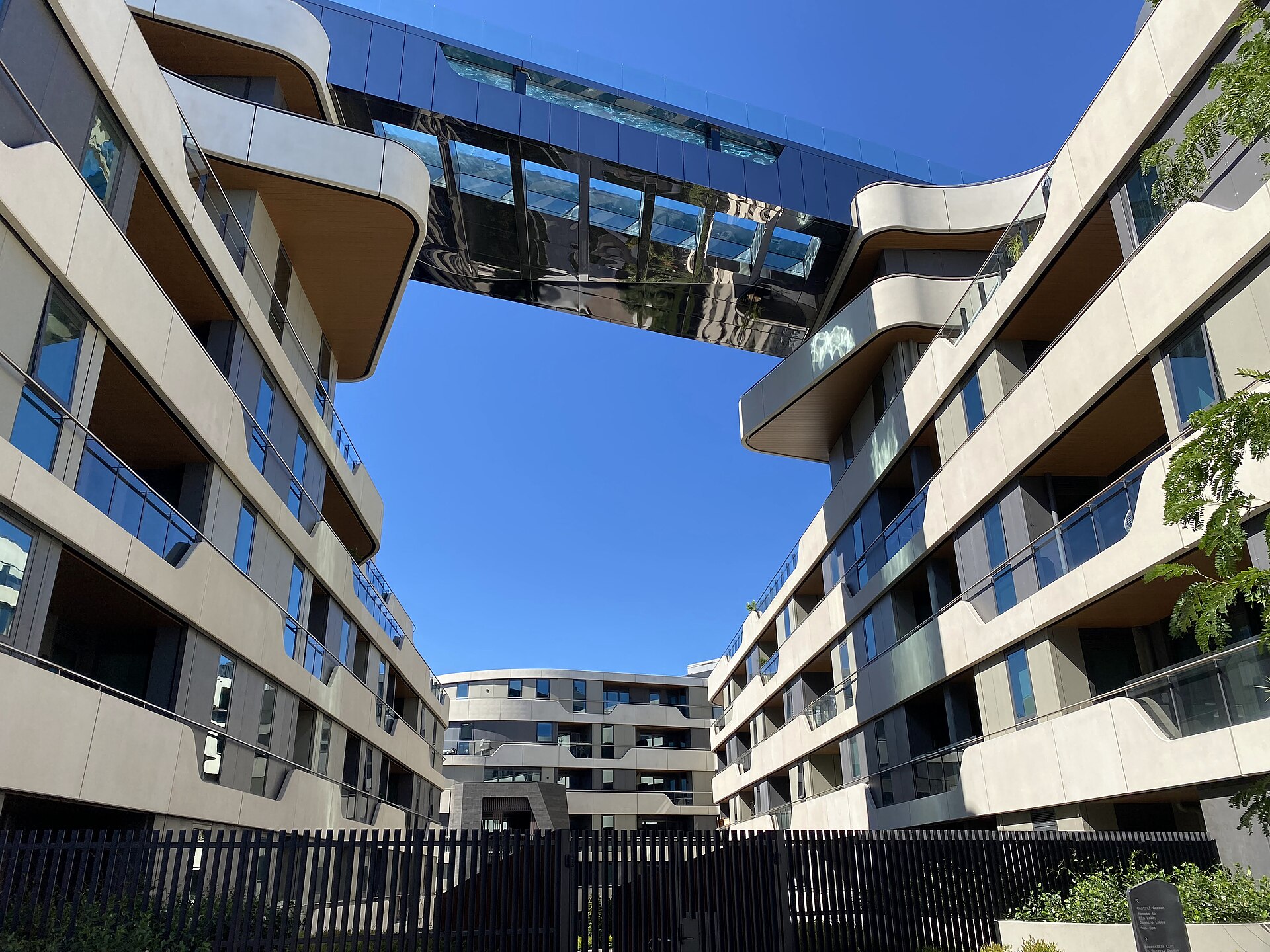
Photo: -wuppertaler / Wikimedia Commons, CC BY 4.0 · See the image credits page.
A swimming pool on an Australian block is a drowning hazard with a fence around it. The fence is not a style option. It is a barrier system described, in the main, by AS 1926.1, sitting under the National Construction Code and under state laws that do not all say the same thing. This essay explains how to think about that system while you still have a pencil in your hand. It is not a substitute for the current standard, the current state Act, or a licensed certifier on your site.
We will not describe how to lower, prop, tie back or otherwise defeat a barrier. If a design only works when a gate is left open, it is not a design.
Start with the standard, then the state
AS 1926.1 is the document most conversations mean when they say “the pool fence rules”. It deals with isolating barriers: height, openings, the non-climbable zone, gates, and how a boundary fence may be used as a barrier. AS 1926.2 deals with location. Your certifier will work to the editions the NCC and your state have called up, not to a blog post.
Each state then runs its own habits. New South Wales has a swimming-pool register and a certificate that appears at sale and lease. Queensland has a pool-safety certificate culture and licensed inspectors who are used to arguments about doors. Victoria folds much of the work into the building permit and then into occupancy duties. Do not assume a fence that passed in one capital will pass, unchanged, in another. Do not assume a 1990s fence is legal because it has always been there.
If the house is still on the drawing board, the barrier belongs in the brief with the joinery. If the house exists, name which doors and windows will have to change. Approvals and the barrier are one conversation.
Non-climbable zones are the part owners forget
A barrier is only a barrier if a child cannot use the world beside it as a ladder. AS 1926.1 describes a non-climbable zone: space on the approach side that must stay clear of footholds. BBQ benches, pots, stacked loungers, a sloping wall, a horizontal slat, a pump cover, a landscape hedge that has grown up — these are how legal fences become illegal gardens.
Draw the zone on the landscape plan at mature plant size. Write it into the joinery. If a certifier cannot see a clean approach, you do not have a clean barrier. The fix is to move the furniture, not to invent a clever step.
Boundary fences used as barriers are often required to be taller than an internal fence, and the climbable face may be judged from the neighbour’s side. A neighbour who adds a shed or a tank can change your compliance. Talk to them before you rely on their fence as your only north barrier.
Gates are where barriers fail
Most household drownings that involve a fence involve a gate that was open, that did not latch, or that a child could operate. Specify a gate that swings away from the pool, that closes itself from any standing position, and that latches itself as the current standard requires. Then leave it alone.
Do not hold a gate open with a brick or a bag of salt. Do not “just for the party” tie it back. Pool gates are hardware: a closer that still works in a northerly, a latch that still works with salt on it, and a leaf that has not dropped on the paving. On the coast the hardware is a durability item as well as a safety item. A seized closer is an open gate. A second gate is a second failure point; add it only if a trolley to the plant room needs it.
Boundary fences, windows and doors
An isolating fence entirely in your yard is the clearest story. Using the house as a side of the barrier is how indoor–outdoor living becomes a joinery problem. Every door onto the pool area must meet the rules that apply in your state. Every window a child could climb through must meet the opening and height rules that apply.
This is where new houses go wrong. A stacker the architect loved, a kitchen servery that is also a step, a low bedroom window onto a courtyard — these can be designed correctly if they are designed as barrier elements. They cannot if someone says “we will sort the fence later”.
Indoor and enclosed pools do not escape this. A pool in a room is still a pool. A boundary fence that is your barrier stays your responsibility, even when the pretty face is on the neighbour’s side.
Glass, slats and metal
Glass pool fencing is popular because it disappears in a photograph. It is a real barrier when the panels, gaps and spigots are right and nothing climbable sits against it. It is also a maintenance object: salt etch, handprints, a panel that sings in the wind. On a small terrace it can be the only way to keep a view. On a coastal front row it can be a cleaning hobby.
Metal palisade and vertical-bar fences are the ordinary, honest barrier. They take a knock and do not pretend the pool is unfenced. Horizontal elements that a foot can use are how they fail the standard.
Slat fences sit in fashion and in danger. A horizontal slat screen is often a ladder. A vertical slat screen can work if the gaps and rails meet the standard. Do not ask a certifier to “be reasonable” about a decorative screen you already built.
None of these materials is a moral choice. A glass fence with a pot against it is a worse barrier than a steel fence that is kept clear. Choose for the view, the wind and the salt, then build it as a barrier.
Inspections, registers and the sale
Several states now expect a pool to be on a register and to have a certificate at sale, lease or on a set interval. Inspectors look at height, gaps and the gate, and at the things households add later: a heat-pump cover, a timber bench, a vine. Have the barrier inspected when you finish the job, and again after you build the cabana or a raised planter. If an inspector fails the gate, fix the gate. Do not argue that “no child lives here”. The standard does not care who lives there this year. When you buy a house with a pool, treat the certificate as seriously as the building report.
Design the barrier as architecture
The least ugly fences were drawn with the house: a glass panel that lines up with a jamb, a metal fence that continues a garden wall, a gate on the path you actually walk. What does not work is a beautiful wet edge and a panic of panels in the last week, or a kitchen that can only see the water if the sliding door is stacked open. The outdoor living of a pool includes the fence.
Pay for a designer who draws the barrier in plan and elevation, and a certifier who will walk the site before the footings are poured. If a quote is cheaper because “the fence is provisional”, you do not yet have a quote for a legal pool.
What this essay will not do
It will not give you a method for propping a gate, disabling a closer, lowering a panel, or using furniture as a step. It will not tell you that supervision replaces a barrier; both are required. It will not tell you that a spa or plunge is exempt because it is small — exemptions, where they exist, are narrow and must be read in the current law.
If you are unsure, ask a licensed pool-safety inspector or a building certifier in your state. Bring a survey, the drawings, and photographs of every opening onto the water.
A custom pool is one of the few household projects that can kill a child on an ordinary Tuesday. The materials can be beautiful. None of that matters if the barrier is a negotiation. Build it, keep it, and design the garden so that keeping it is easy.
Photo: -wuppertaler / Wikimedia Commons, CC BY 4.0
Questions readers ask
- Can I use the house wall as one side of the pool fence?
- Sometimes, if every opening in that wall meets the rules for doors and windows that give onto a pool area. A stacker that a toddler can operate is not a barrier. Treat the joinery as part of the fence, and have a certifier say so before the frames are ordered.
- Is glass safer than a metal fence?
- Neither material is “safer” in the abstract. A well-built metal or slat fence that cannot be climbed and that has a working gate is a proper barrier. So is a well-built glass fence. Safety is height, gaps, the non-climbable zone, the latch, and the absence of furniture against the panel — not the transparency of the infill.
- How often should a pool barrier be inspected?
- After any building work beside it, after a storm that moves a panel, and on the cycle your state or council requires. Several states now expect a registered pool and a certificate at sale or on a set interval. Do not wait for a real-estate campaign to discover a gate that no longer closes.
Found an error? Use the contact form or read how we handle corrections in editorial standards.