Orientation, shade and solar gain for Australian pools
The same pool faces a different climate at 9am and 4pm. Aspect, trees and paving decide whether you swim, scald your feet or fight algae.
Custom Pools editorial team · 22 January 2026 · Updated 22 January 2026 · 21 min read
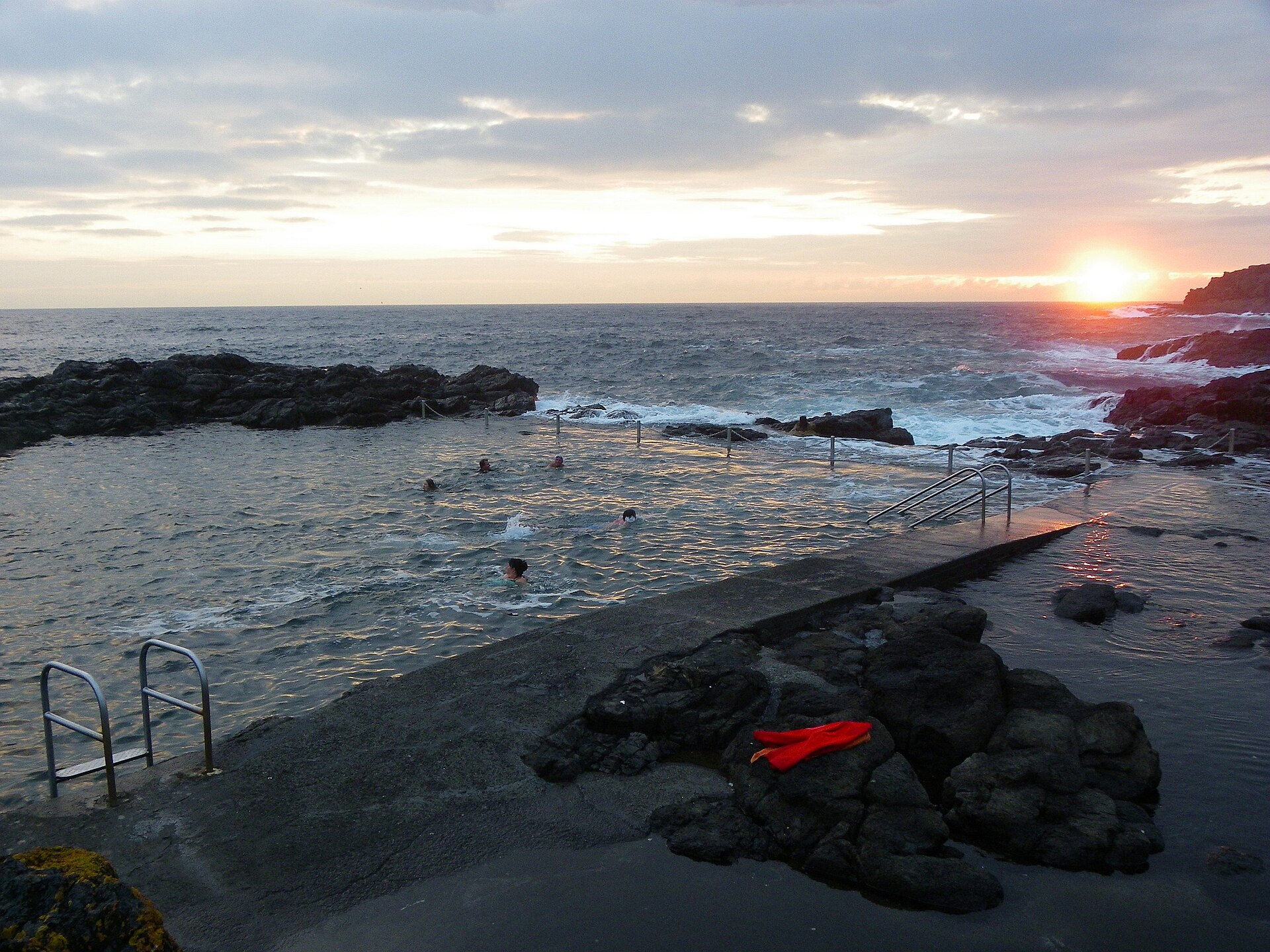
Photo: Liese Coulter, CSIRO / Wikimedia Commons, CC BY 3.0 · See the image credits page.
Australian pools are outdoor rooms with no roof, which means the sun is either your heating system or your opponent. Owners brief a designer on tiles and then discover in February that the western coping cannot be crossed in bare feet, or in August that the water never climbs out of the high teens because a neighbour’s new second storey owns the northern sky.
Orientation is not a vibe. It is a set of hours. Walk the yard at 8am, noon and 4pm in the season you will actually swim, and again in midwinter if you hope to extend the season. Note where the house throws shade, where the western sun hits the future paving, and where a deciduous tree would help without becoming a climbing frame for the barrier. That walk belongs in the design brief, not in a complaint after handover.
North light, west glare, south shade
In most of Australia the useful winter sun comes from the north. A pool that sees northern sky from late morning through early afternoon will pick up free heat, dry the paving after a southerly, and give solar collectors on the roof a job. That is why so many decent suburban pools sit along the northern edge of the garden, with the house to the south and the living room looking toward the light.
West is a different proposition. Western sun in January is harsh in Melbourne, brutal in Adelaide and Perth, and still unpleasant in Sydney after a humid day. It heats dark coping until it is unpleasant to stand on. A west-facing long axis with no afternoon shade is a common way to spend a lot of money on a pool you use before 11am.
- East is kinder: morning sun warms the water while the air is still cool, and the house can take the western blast later.
- North is the winter workhorse, and the face solar collectors typically want.
- West needs shade on the paving more than it needs more water.
- South-facing water in a tight city garden can sit cold and damp, especially under a two-storey house.
South shade is not a reason to abandon the project. It is a reason to budget for heating, a cover, and a sanitiser regime that assumes less UV.
Melbourne is not Brisbane, and Perth is not either
Climate averages hide the hour that matters. Melbourne and Hobart give you a short, bright swimming season and a long shoulder that only works if the water is heated and covered. Northern aspect and a cover are worth more here than a large unshaded sheet of water. A deciduous tree on the north-west can be a gift: shade in a heatwave, light on a still April afternoon.
Brisbane and the Gold Coast give you a long season and a summer that is as much about glare and storms as about cold water. You still want winter sun, and somewhere to get out of the western sky in January. Shade the paving first. A cover still earns its keep overnight.
Sydney sits in the middle and adds humidity. A north-east aspect with afternoon shade on the terrace is typically the most liveable pattern. The same household will also meet a week of westerlies that make unshaded coping hostile. Keeping a Sydney pool healthy in summer is as much about shade, covers and circulation as it is about the chlorinator setting.
Perth adds dry heat, intense light and a long, clear summer. Solar gain is easy. Comfort is not. Pale paving, a cover, and real western shade are not luxuries. Inland New South Wales and the Victorian north are harsher again. Cairns and Darwin reverse some of the southern logic: you are managing humidity and wet-season cloud, not cold water. Shade becomes a livability device. Heating conversations shrink; algae conversations grow if you enclose anything.
Coping, paving and the frypan problem
The water can be 26 degrees and still unused if nobody will walk to it. Dark basalt, dark porcelain and some granites store afternoon heat. Pale limestone, light concrete and some sandstones stay closer to bearable but can glare and, in some stones, mark. The orientation of the main sitting edge matters as much as the colour. A dark western coping band with no shade is a design error, not a materials preference.
Think about the first two metres of paving, not the infinity photograph. If that band faces west, give it a deciduous canopy, a pergola with a vine, or a roof that does not turn the terrace into a cave in July. Leave a strip of sun for winter if you live south of Newcastle. Bare feet are the test: if you cannot stand on the sample in January afternoon sun, do not specify a hundred square metres of it on the hot side.
Shade that helps, and shade that grows a pond
Deciduous versus evergreen
A deciduous tree on the north or north-west is one of the few landscape moves that works in both January and July. It drops shade when you are hot and lets low winter sun through when you are not. Jacarandas, some pears, and a well-placed crepe myrtle are the usual suburban candidates; the right species depends on soil, frost and how much leaf litter you will tolerate.
Evergreens on the north steal the winter season. They make sense as a windbreak on a southern or coastal edge, or as a privacy screen that is not in the solar path. On the west they can be justified if you have no room for a structure and you will not swim in winter anyway. Understand the trade.
Keep the trunk and the canopy outside the barrier’s non-climb zone. Fruit, heavy leaf drop and roots belong away from skimmers, shells and pipes.
Vines versus built shade
A deciduous vine on a simple steel or timber frame is often better than a solid roof: cheaper, seasonal, and lighter to build. It does need a gardener. A vine you never prune becomes an evergreen sail and a climbing risk if it reaches the fence.
Built shade — a pergola with slats, a sail, a cantilevered roof — is more predictable. Slats can be oriented for summer shade and winter stripes of light. Sails fail in proper wind. A solid roof on the northern side of a Melbourne pool can steal the winter season unless the underside is high.
Shade the paving and the sitting edge first. Shade the entire water only if glare or tropical heat demands it. A fully shaded pool in a southern capital is a cold pool with a green north wall.
Algae, sanitiser and the leafy oasis
Shade does not automatically make water healthier. Direct sun burns chlorine, which is why a bright pool can need more sanitiser on a long January day. Shade reduces that loss, but it also reduces UV that would otherwise discourage some growth, keeps walls damp, and usually arrives with trees. Leaves, bark and pollen are food. Still corners under a canopy are where the cleaner gives up.
If the design puts one long wall in permanent shadow, specify returns that wash that wall and accept that you will brush it. Dark interiors hide the early green; they do not prevent it. Overhanging evergreens plus a south wall plus a lazy pump schedule is a reliable way to own a pond.
Covers change the equation again. A cover on at night holds heat and stops debris. A cover left on in high summer can cook the water. Orientation and the cover schedule belong in the same paragraph.
Solar collectors want sky, not sentiment
Solar pool heating is a roof or rack of collectors with a pump that sends pool water through them when the sun is up and the water is cooler than you want. It is the cheapest heat to run when the sky cooperates, and it is useless if the collectors face the wrong way or sit under a tree you refused to prune.
Collectors typically want a northerly aspect and a pitch that sees winter as well as summer sun. A west-only roof can still work in a long Perth summer and will disappoint in a Melbourne spring. A shaded water surface is not a deal-breaker if the roof is clear; a sunny pool with collectors under a neighbouring cedar is a waste of pipe and plastic.
Pair solar with a cover. Without a cover you are heating the sky. The rest of the heating conversation — heat pumps, gas, when to use each — sits in solar, heat pumps and gas. Orientation decides whether solar is the lead act or a hopeful extra.
If you are building new, put the collector zone on the plan with the pool. Hip roofs and photovoltaic arrays compete for the same northern face.
A practical order of decisions
- Stand on the future coping at the worst hour of the year you will swim. If you will not stand there, move the sitting edge or add shade.
- Give the water as much northern sky as the house and the neighbour allow.
- Protect the western paving. Prefer deciduous shade on the sun sides.
- Keep trees out of the barrier and out of the skimmer. Put collectors on the open north roof. Budget a cover.
None of this requires a precise percentage of solar gain. It requires a site visit at the right hours and a brief that names the climate. The water will follow.
Photo: Liese Coulter, CSIRO / Wikimedia Commons, CC BY 3.0
Questions readers ask
- Is a north-facing pool always best in Australia?
- North light is the most useful for winter swimming and for solar collectors, but it is not automatically comfortable in summer. You still need afternoon shade on the paving and a cover, especially in Perth and inland New South Wales.
- Should I plant evergreen trees on the western boundary?
- Evergreens block winter sun as well as summer glare. On the west, a deciduous tree or a vine on a frame typically gives better seasonal control. Keep planting outside the barrier’s non-climb zone.
- Why does a shady pool go green faster?
- Shade slows chlorine loss from sunlight, which sounds helpful, but it also cools the water, reduces mixing and leaves walls that never dry. Combined with leaf litter, that is a friendly home for algae if circulation and sanitiser are lazy.
- Can I rely on solar heating if the yard is partly shaded?
- Only if the collectors themselves see sun. Roof or rack collectors want a clear northerly aspect. A shaded water surface can still be heated if the collectors are in the open; a sunny pool with a shaded roof is the opposite problem.
Found an error? Use the contact form or read how we handle corrections in editorial standards.